Skillet Steak with Garlic Herb Butter
- Total
- 21 min
- Active
- 5 min
- Serves
- 2
- Level
- moderate
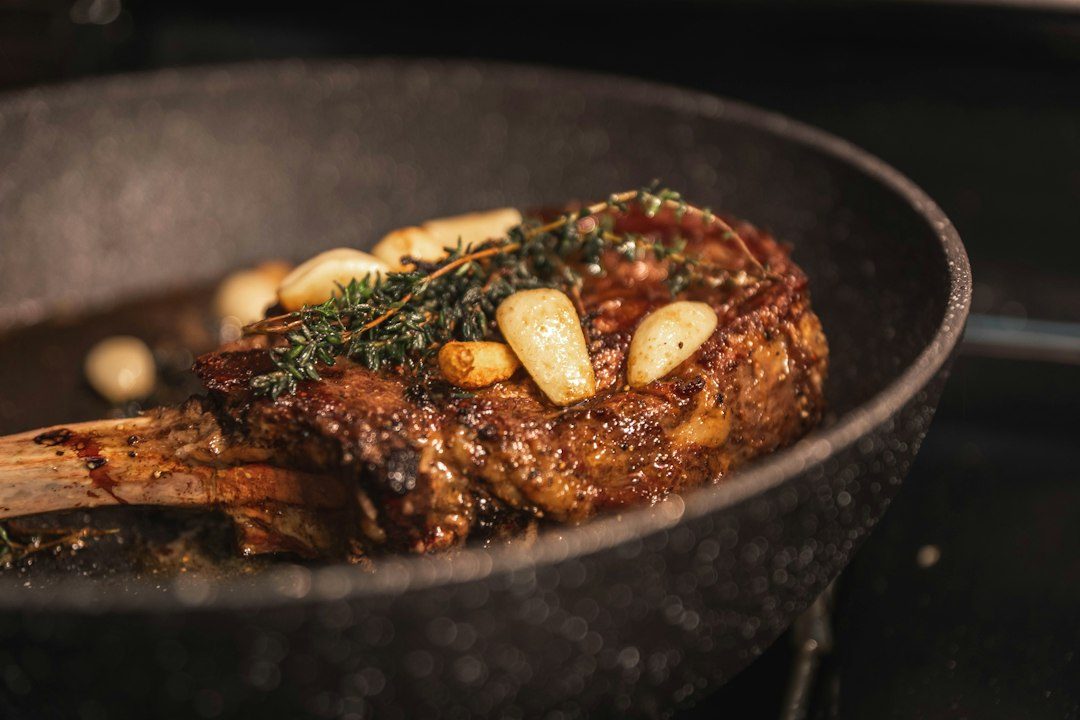
The whole trick is heat and patience: get the pan properly hot, leave the steak alone while the crust forms, then finish it in butter gone nutty with garlic and thyme. There is no sauce to reduce — what's left in the pan after basting is the sauce.
Ingredients
Method
-
Pat the steaks completely dry and season both sides heavily with the salt and pepper. Heat the oil in a heavy skillet, ideally cast iron, over high heat until it's just short of smoking.
3 min -
Lay the steaks in the pan and leave them alone until a deep brown crust forms on the bottom, about 3 minutes. Moving them early tears the crust before it sets.
3 min -
Flip and sear the second side the same way, about 3 minutes.
3 min -
Reduce the heat to medium, add the butter, garlic and thyme, and tilt the pan so the butter pools. Spoon it over the steaks continuously until it smells nutty and a thermometer reads 130°F (54°C) for medium-rare.
2 min -
Move the steaks to a board, tent loosely with foil, and rest 5 minutes before slicing against the grain. Carryover heat brings them to about 135°F (57°C).
5 min
Substitutions
- Bone-in ribeye — Boneless ribeye or New York strip. Strip is leaner and cooks a touch faster, so start checking temperature early.
- Fresh thyme — Rosemary, or a pinch of dried thyme added with the garlic.
- Butter baste — A drizzle of good olive oil off the heat, if avoiding dairy. The crust won't lacquer the same way, but the garlic and pan flavor still carry.
Storing leftovers
Leftovers keep three days in the fridge, wrapped well. Slice cold for sandwiches, or warm gently in a low oven or dry skillet — reheating hard toughens the meat, so stop as soon as it's warmed through. It doesn't freeze well once cooked.
Questions
What if I don't have a meat thermometer?
For a 1 to 1.25-inch steak, about 3 minutes per side plus 2 minutes of basting lands close to medium-rare. Press the center with a finger — it should give like the base of your thumb when your hand is relaxed.
Why bone-in ribeye specifically?
The bone insulates the meat nearest it, so that section cooks a little slower and stays juicier. Boneless ribeye or strip works fine too — just watch the timing since it cooks slightly faster without the bone.
Can I use a nonstick pan instead of cast iron?
A heavy stainless or cast iron pan holds and returns high heat far better. Nonstick coatings aren't rated for the heat this sear needs and can break down.
My smoke alarm keeps going off — what should I do?
Crack a window and turn on the exhaust fan before you start. A proper sear on a very hot pan naturally makes some smoke — that's the trade-off for the crust.