Pan-Seared Duck Breast with Apples and Cider Pan Sauce
- Total
- 45 min
- Active
- 10 min
- Serves
- 4
- Level
- moderate
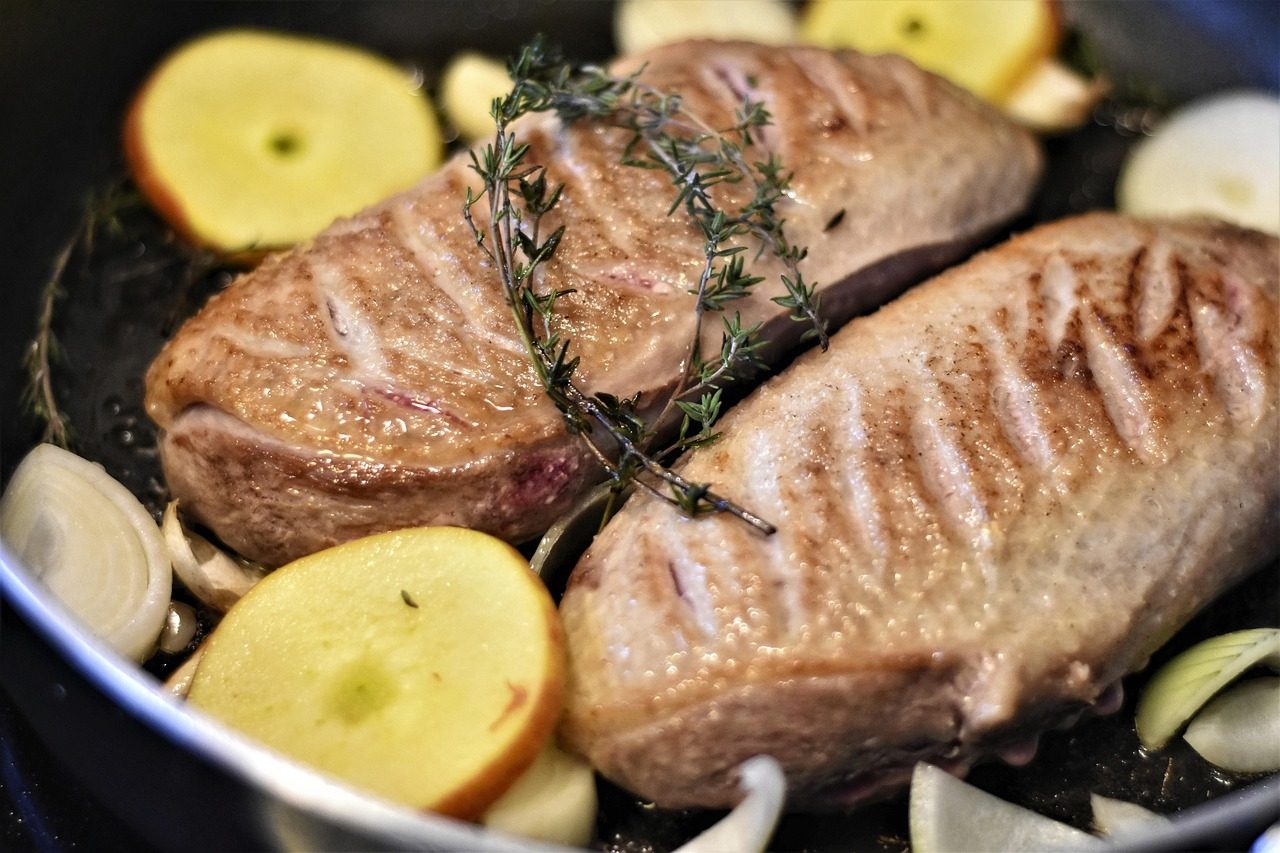
Starting the duck skin-side down in a cold pan lets the fat render slowly, so the skin turns fully crisp instead of scorching before the inside catches up. The same skillet then turns apple wedges and pan drippings into a glossy cider sauce — one pan for the whole thing, start to finish.
Ingredients
Method
-
Pat the duck breasts dry and score the skin in a tight crosshatch, cutting through the fat but not into the meat. Season both sides with the salt and pepper.
-
Place the duck breasts skin-side down in a large oven-safe skillet and set over medium-low heat. Let the fat render slowly until the skin is deep golden and crisp, pouring off excess fat into a heatproof bowl once or twice as it collects.
12 min -
Flip the breasts and transfer the skillet to a 400°F (204°C) oven. Roast until an instant-read thermometer reads 165°F (74°C) at the thickest part.
8 min -
Move the duck to a plate, tent loosely with foil, and let it rest while you build the sauce.
5 min -
Carefully pour off all but 2 tablespoons of fat from the skillet (the handle is still hot). Add the apples and shallot and cook over medium heat, stirring occasionally, until golden at the edges and just tender.
5 min -
Add the thyme, then pour in the cider and vinegar, scraping up the browned bits from the bottom of the pan. Simmer until reduced by about half.
4 min -
Remove from the heat and stir in the butter a piece at a time until the sauce turns glossy. Discard the thyme sprigs.
1 min -
Slice the duck breasts against the grain and serve over the apples, spooning the sauce over the top.
Substitutions
- Duck breast — Bone-in, skin-on chicken thighs, using the same cold-start method — but cook to 165°F (74°C) all the way through, about 20 minutes total, since thighs don't hold a pink center the way duck can.
- Apples — Pears, cut into wedges the same way. They soften faster, so add them to the pan a minute or two after you start.
- Apple cider — Apple juice with a squeeze of lemon, or chicken stock for a less sweet sauce.
- Shallot — A quarter of a small yellow onion, thinly sliced.
Storing leftovers
Duck keeps well chilled in an airtight container for up to three days, sliced or whole; store the apples and sauce separately. Reheat gently in a low oven or skillet, since a microwave toughens duck quickly, and spoon the sauce back on at the end so it doesn't reduce further.
Questions
Why start the duck skin-side down in a cold pan?
Starting cold gives the fat time to render gradually as the pan heats up, so the skin turns fully crisp instead of scorching on the outside while the fat underneath stays soft.
Do I really need to score the skin?
Yes. Scoring helps the fat render faster and keeps the breast from curling as it cooks, so it sits flat against the pan for even browning.
What if my skillet isn't oven-safe?
Finish it on the stovetop instead: after flipping, reduce the heat to medium-low and continue cooking until it reaches 165°F (74°C) at the thickest part, about 8 to 10 minutes, checking with a thermometer.
Can I use duck legs instead of breasts?
Not with this method. Legs need a slow braise to become tender, while breasts are suited to quick searing — save legs for a braised preparation instead.